+86 15633683072
The phone call we get most often starts the same way: "Our welding line has been running for fifteen years. We have good welders. But we can't keep up, and we can't find new talent. How do we automate without tearing everything out?"
It's the right question. Because here's the truth that glossy automation brochures don't tell you: ripping out existing lines and starting from zero is rarely the answer. The real solution lies in robotic automation companies that understand how to layer technology onto what you already have. These robotic automation companies specialize in delivering automated welding solutions that fit your existing footprint.
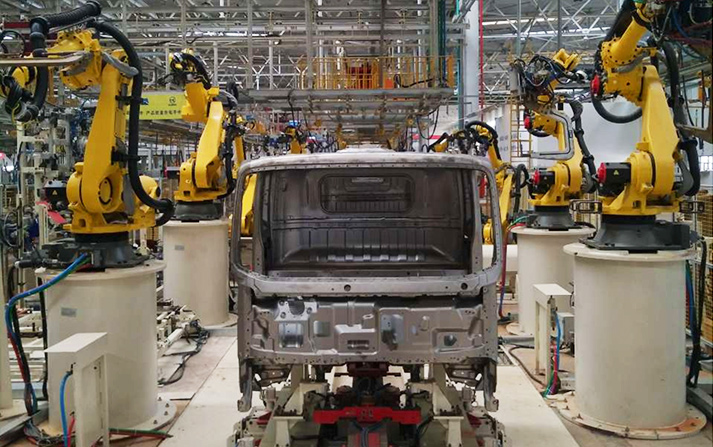
Building a complete automated robotic welding line from scratch might cost millions and require months of downtime. Most manufacturers can't afford either. What they can afford is strategic integration—adding automation where it delivers the fastest return while leaving functional manual stations in place. Experienced robotic automation companies excel at designing such incremental automated welding solutions.
The key is identifying the bottlenecks. In most welding operations, 20% of the welds consume 80% of the labor. Those are the long, repetitive seams that exhaust welders and slow production. Those are exactly where automated welding solutions deliver immediate impact.
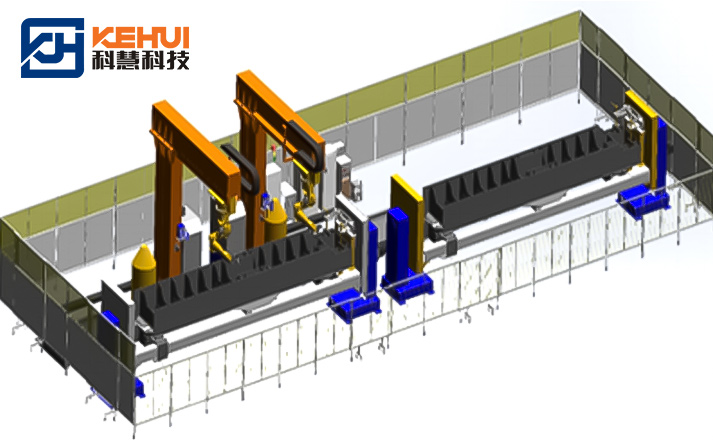
The most straightforward path to integration starts with modular robotic cells that handle specific joint types. A manufacturer might install a single automated robotic welding line dedicated to long straight seams or repetitive circular welds, while keeping manual stations for complex joints that require human judgment. This first strategy represents a typical approach offered by leading robotic automation companies—deploying focused automated welding solutions that complement existing work.
This approach offers several advantages:
Lower upfront investment: One cell instead of a complete line overhaul
Minimal disruption: Installation happens alongside existing production
Faster ROI: The robot runs continuously on high-volume work while manual stations handle variety
As production demands grow, this initial cell can evolve into a full automated robotic welding line with additional modules, a path many robotic automation companies help their clients navigate.
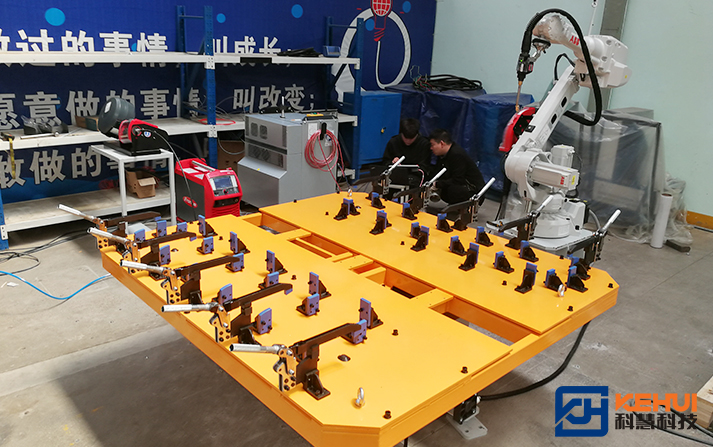
Traditional industrial robots often require extensive safety guarding and programming expertise—barriers that make integration intimidating. But robotic automation companies have increasingly turned to collaborative systems that work alongside human welders. These collaborative systems are now a standard offering among innovative robotic automation companies, expanding the range of automated welding solutions available for existing lines.
These systems offer what matters most for existing lines: flexibility. A collaborative welding cell can be programmed in minutes, not days, making it viable for shops running small batch sizes. One Finnish manufacturer integrated a collaborative robot into their stainless steel production and saw welding productivity increase by 30%, while post-processing work dropped by 60%.
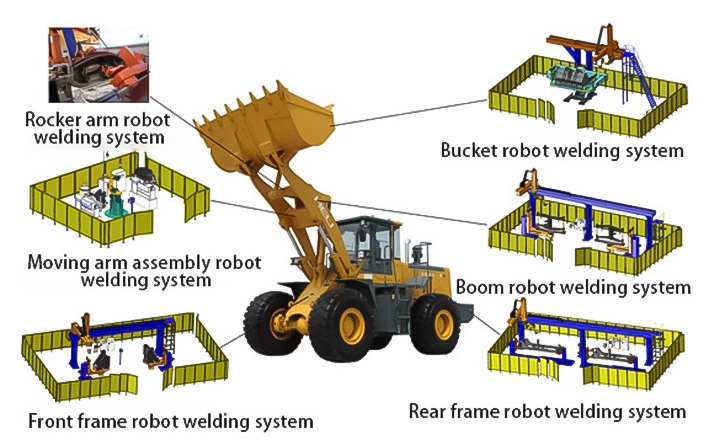
Traditional automated welding solutions have always demanded precision fixturing—expensive custom clamps that held parts in exactly the right position. But newer systems use vision and seam tracking to compensate for part variation, reducing or eliminating the need for complex fixtures. This jigless approach is a game-changer, and forward-thinking robotic automation companies are integrating it into their automated welding solutions portfolio.
For existing lines, this is transformative. It means you can automate without redesigning every part or investing in new tooling. The robot adapts to your parts, not the other way around. Many robotic automation companies now offer retrofittable vision packages that turn basic robots into adaptive automated welding solutions.
Some of the most successful integrations don't fully automate any single station—they redistribute work across the line. Skilled welders handle the critical root passes and complex geometries, while robotic welding solutions handle the fill and cap passes that are physically exhausting. This hybrid model extends the productive life of experienced welders while letting automation handle the work that breaks bodies. It's not replacement—it's augmentation.
Over time, these hybrid configurations often become the foundation for a future automated robotic welding line, guided by robotic automation companies that understand the transition.
Integrating automation into existing lines creates a new challenge: data. Manual lines generate no process information. Automated robotic welding lines generate terabytes of it—current curves, weld signatures, cycle times. Data from an automated robotic welding line helps refine automated welding solutions continuously, identifying patterns that human operators might miss.
The manufacturers who win are those who use this data. When a weld parameter drifts by 2%, modern systems flag it before the weld fails. When electrode wear accelerates, the controller schedules maintenance during the next break. This predictive capability transforms maintenance from reactive to strategic.
Here's what experience teaches: buying a robot is easy. Making it weld profitably alongside existing manual stations is hard. The difference comes down to the integrator.
A qualified welding robot integrator understands more than robotics. They understand metallurgy—how your specific base metal reacts to heat input, what preheat prevents cracking, what gas mixture gives the right penetration. They understand production flow—how parts arrive, how work is staged, how the robot communicates with upstream and downstream operations. A great welding robot integrator also partners with robotic automation companies to deliver the most effective automated welding solutions for your unique situation.
We've been integrating automated welding solutions since 1994. Before "Industry 4.0" was a term, we were helping manufacturers figure out how to add robots to existing lines without stopping production. We learned that the best integrations are invisible—they just make the line run better.
We've worked with manufacturers across the globe, from automotive suppliers to heavy equipment fabricators. Every installation includes on-site engineering support because we know that integration isn't a transaction—it's a partnership. Our engineers don't just install equipment. They train your team, troubleshoot your edge cases, and help you optimize programs for each part variant.
When you work with us, you're not just buying robotic welding solutions. You're buying three decades of learning what works when production runs 24/7, when materials vary between suppliers, when operators rotate shifts. You're buying a library of process parameters for every material type. You're buying field service engineers who understand that stopping production costs thousands per minute, so prevention beats reaction.
The line you have today can become the line you need tomorrow. It doesn't require starting over. It requires the right welding robot integrator—one who sees the opportunity in what you've already built and can deploy the right automated welding solutions and robotic welding solutions to get you there.
Let's talk about what that could look like on your floor.
Zhengzhou Kehui Technology Co., Ltd
Email: info@zzkehui.com





 Chinese
 English
 OA
OA Current location:
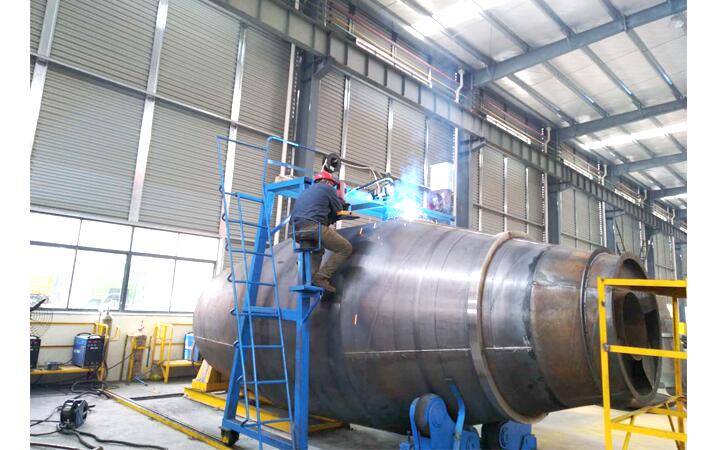 Concrete Mixer Drum Robotic Welding Solutions
 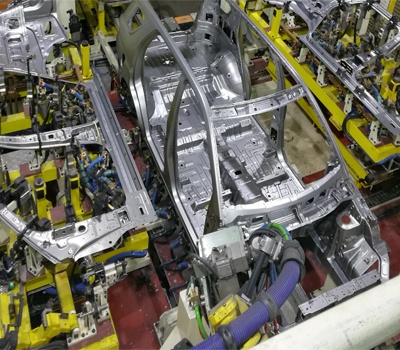 Automobile Body Production Line Welding Fixtures
 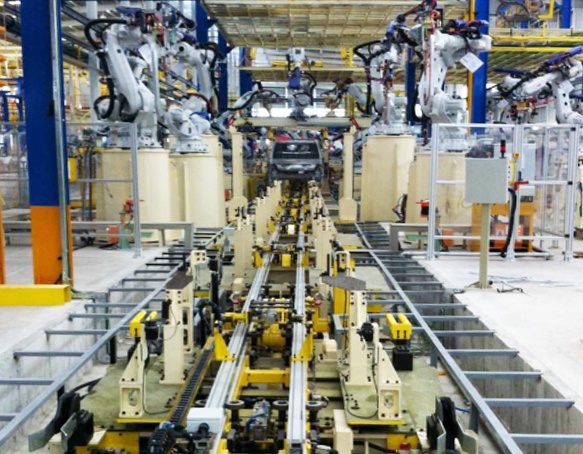 Automotive Body Welding Automated Manufacturing Solutions
 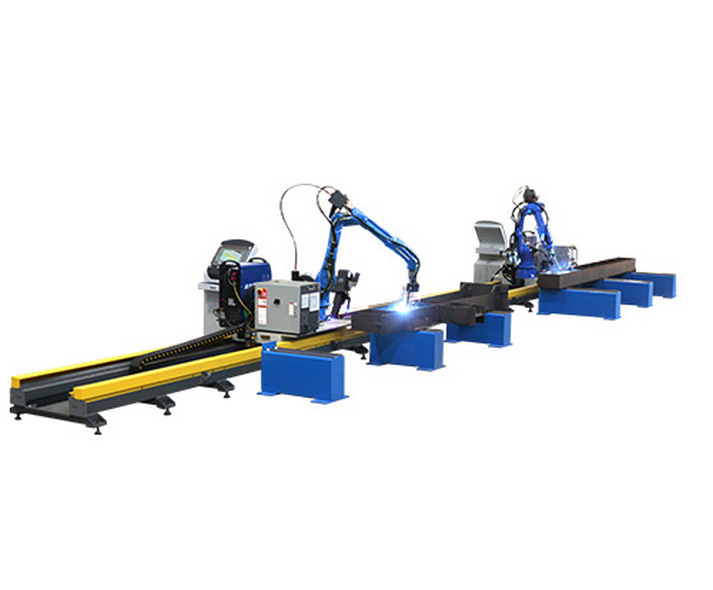 Free-Teaching Programming Welding Robot Cell For I Beam Welding
 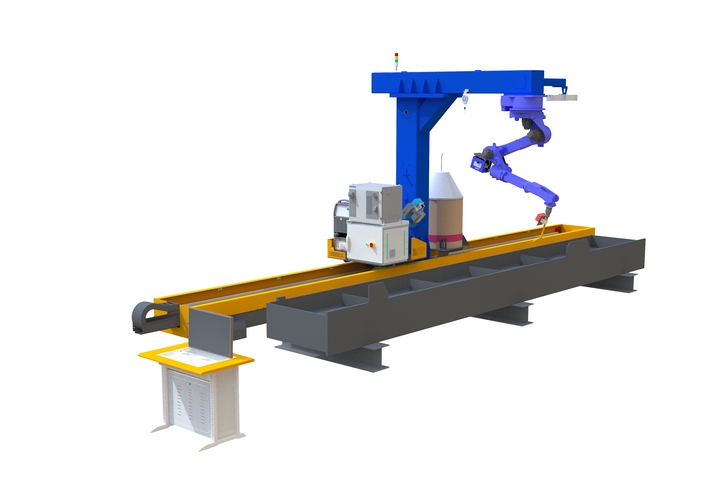 No Programming Required Robotic Welding Systems for H beam Welding Line